



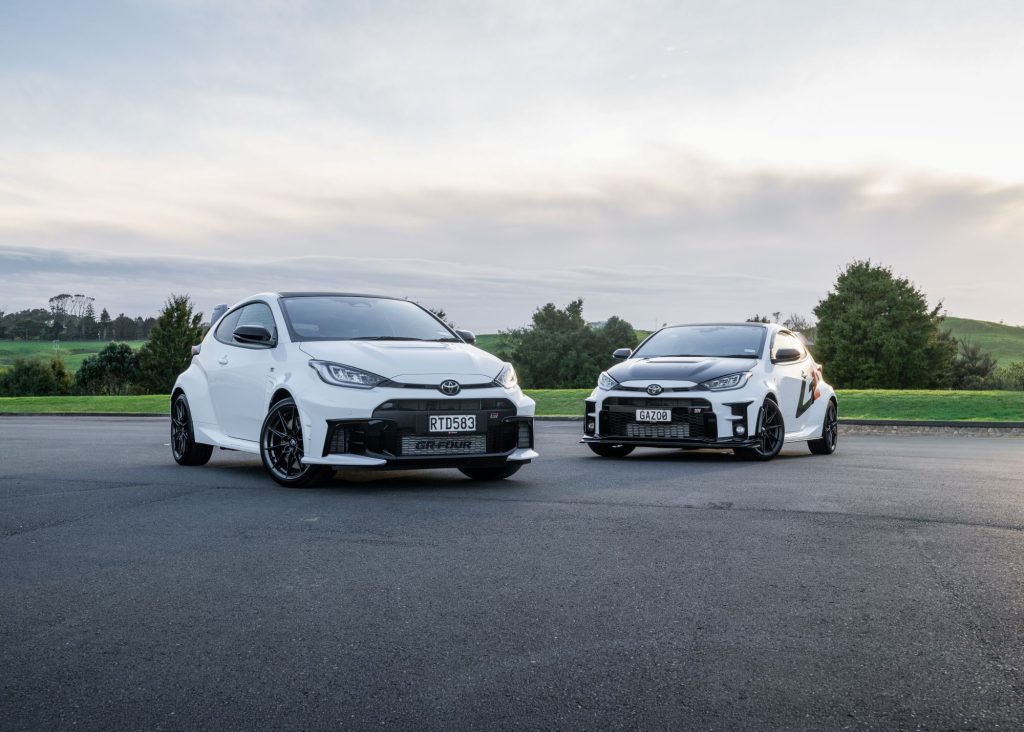
The GR Yaris is quite an extraordinary road vehicle. Born out of the Toyota Gazoo Racing World Rally Team, you can buy this as a road, a factory built Rally2 or in NZ a Toyota GR Yaris Rally Cup car. Sorry, but the Rally1 WRC car is not for sale.
The road version is a thrill to drive with very quick acceleration, superb road holding, an ergonomic driver’s position and epic braking. What’s more, there are now a load of Gazoo Racing parts for enthusiasts to upgrade.
Common in both road, Rally2 and Toyota GR Yaris Rally Cup versions, is the G16-GTS 1.6 turbocharged three-cylinder engine built by Gazoo Racing. The Rally2 version output is quoted at 300hp (224 kW), the Yaris Rally Cup car 262hp (192kW) while the road version is quoted at 221 kW.
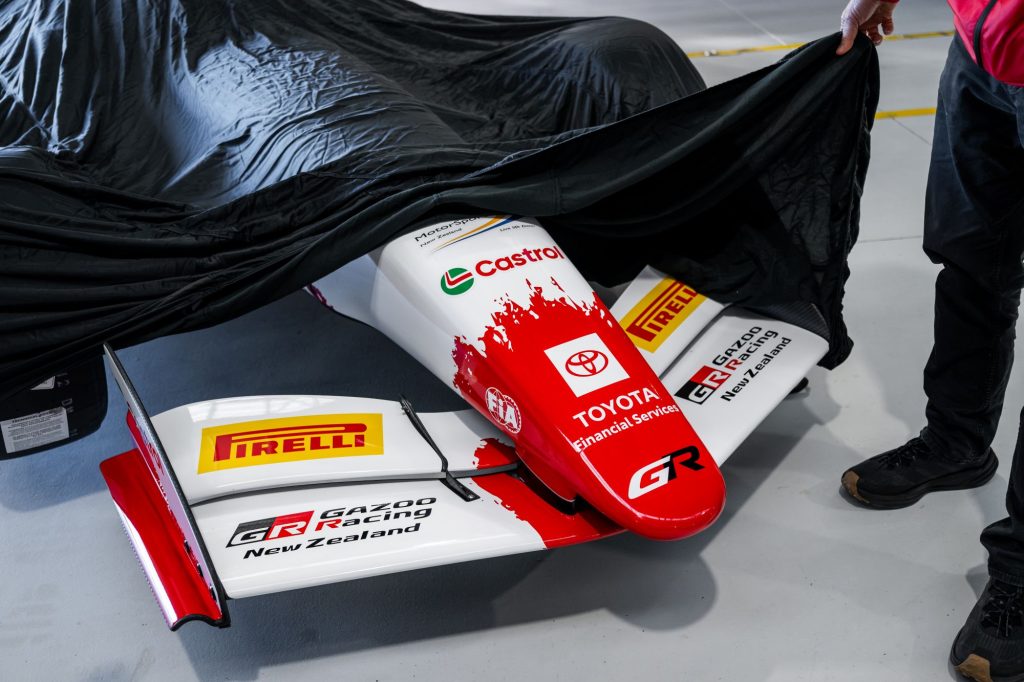
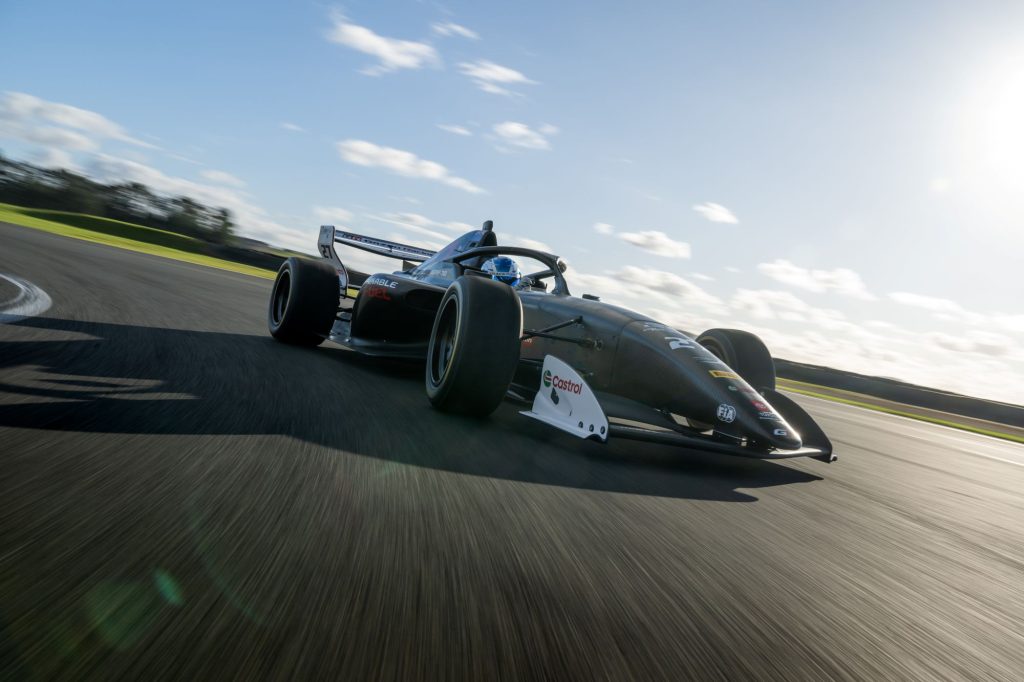
Last week GAZOO Racing New Zealand released the next generation Castrol Toyota Formula Regional Oceania Trophy car – the GRF-70 and it is an exciting addition to single seater racing in New Zealand.
Of the five FIA Formula Regional series globally – NZ, Europe, Asia, Japan and the USA, the Gen 2 T‑326 Tatuus chassis is currently used in the FIA Formula Regional European Championship (FREC), the FIA Formula Regional Asian Championship and in New Zealand.
Formula Regional Americas Championship uses a Ligier JS F3 while Japan will move to the new Dome F112 chassis in 2027.
While the Americas use a Honda 2.0 litre engine, Asia and Europe cars are powered by the brand-new ATM163T engine, developed by Autotecnica Motori and derived from the Toyota G16E unit. Japan will follow suit in 2027 when they introduce the new chassis.
In New Zealand, the new 2027 chassis will be powered by an evolution of the proven 2.0‑litre turbocharged 8AR‑FTS engine used in the series since 2020.
So why haven’t GAZOO Racing New Zealand adopted the G16-GTS 1.6 turbocharged three-cylinder engine, as FR Asia, Europe and Japan have?
In a nutshell, there has been no need to change as the current package, the 8AR-FTS four-cylinder engine is both sound and reliable. In fact, improvements have been found with 14kg stripped out of the engine and more power gained without the expense of reliability.
“We’ve made some significant weight reduction on a number of components such as the rocket cover, the sump and the front cover,” commented David Gouk from Race Engineers who has been heavily involved with the engine program right from the start of the 2005 Toyota Racing Series. “Basically, we have gone through (the engine) and optimized the design of them without sacrificing the performance and structural integrity of it.”
The Toyota G16-GTS unit is immediately at a weight advantage with one less cylinder and the components that go with it.
“With regard to this we have had to come down to a similar weight and in fact we are about 1kg lighter in the overall car weight,” said Gouk. “To get the wheelbase the same, Autotecnica (3-cylinder engined) make the bell housing longer to accommodate that so overall we are lighter than them.
“We already had the four-cylinder 8AR-FTS and such a free revving one with still a lot of potential. It’s a sound package with known reliability.”
Extra horsepower has been gained by Race Engineers using a new turbo, moving away from a factory to an after-market unit.
“We were basically at the limit of the original 8AR turbo in which we had fitted a speed sensor. We ran them to 180,000 rpm so we needed to speed limit them for reliability.
“The factory turbo is actually quite small which causes a restriction and then you get heat that builds up, particularly in the exhaust which is an integral part of the manifold which in turn affects the internal temperatures of the combustion chamber which gets high and we get knock.
“We were limited by the turbo speed and the knock so 300 hp was pretty much our limit on the push to pass whereas this year we can make 315hp.”
Testing is currently already underway at Hampton Downs Motorsport Park and it is expected to achieve about 2,500 kms before the engine is pulled apart and the main structural components are crack tested. Until then the manufacture of these main structural items is on hold.
The coming together of the current 8AR-FTS motor is an interesting story. Found in two road-going Lexus cars, there are two variants with one for the rear-wheel-drive IS200 and the other a NX200 front wheel SUV.
“We use the front wheel drive small block and the head off the rear wheel drive,” continued Gouk. “The advantage of using the rear-wheel-drive head is we don’t have water pipes going from the back of the cylinder head to the front of the car (radiators) as it gets messy with the turbo so this keeps it tidy.
“The 8AR was first used in the previous car, the FT 60, back in 2020 after the FT50 used the 1.8 litre normally aspirated engine which generated about 215 hp.
“The rules moved to either a 1.8 or 2 lit turbo engine making much more power. Basically, what happened was Toyota came to me and said there was a 8AR-FTS which we would run naturally aspirated but the head was designed for a turbo.
“In 2019 we looked at this engine, both front and rear wheel drive engines. That’s when we came up with the use of the different block and head.
“We then start with the short block. We hone it to suit the pistons, gap the rings, measure every bearing clearance. Our tolerance across the engines is less than a percent. This is where we get our advantage of being super consistent and the attention to detail. All those little things stack up such as piston weights and rods weights. We don’t have a good or a bad engine.
“It is optimizing everything such as ring gaps. In a road car it is different in the demands on the engine compared with a racing car when it leaves the pits.”
Come January 2027 we have a brand new GRF-90 Formula Regional chassis coupled with an improved and arguably more powerful 8AR‑FTS engine ready for the four-round Castrol Toyota Formula Regional Oceania Trophy series. Drivers, start your engines!
2027 Castrol Toyota Formula Regional Oceania Trophy Calendar
Rd1 – 8-10 January – Allied Petroleum Hampton Downs International, Hampton Downs.
Rd2 – 15-17 January – Giltrap Group Taupo Historic GP, Taupo.
Rd3 – 22-24 January – Ascot Park Hotel Teretonga Park International, Invercargill
Rd4 – 29-31 January– NAPA New Zealand Grand Prix – Highlands Motorsport Park, Cromwell.


Comments